FEATURES
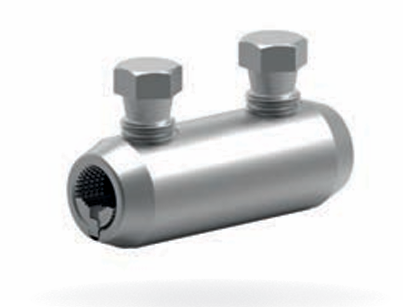
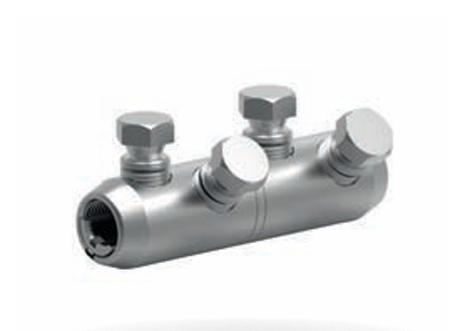
TE Connectivity’s Shear Bolt connectors
are range- taking mechanical connectors
Just six connectors will accommodate
a wide range of aluminum and copper
conductors from #2 AWG compact
stranded to 1000 kcmil standard
stranded class B,from 25 mm2 stranded
and solid to 500 mm2 circular stranded
class 2
Shear Bolt connectors meet the
electrical requirements (Class A) of
ANSI C119.4 and exceed the mechanical
requirements of a class 3 connector by a
large margin of safety
Shear Bolt connectors meet the
electrical and mechnical requirements
(Class A) of IEC 61238-1
Shear Bolt connectors are designed to
be compatible with TE’s Raychem brand
cable accessories and
insulation products
APPLICATIONS
The primary application of Shear Bolt
connectors is for underground splices
up to 42 kV
Shear Bolt connectors are ideally suited
for aluminum to aluminum, aluminum
to copper and copper to copper
applications making them the universal
connector solution.
The only tool required to install
the connector is a standard ratchet
wrench with the appropriate sized
hexagonal sockets
The connector design incorporates
shear head bolts, which ensures that
the correct torque is applied to each
bolt and consequently. The optimal
contact force is generated to minimize
connection resistance
The solid center stop (available on
most sizes) inside the connector
ensures proper conductor positioning
and eliminates oil leakage when
connecting oil impregnated conductors
Two removable inserts in the connector
body centralize smaller conductor
sizes. For larger sizes, inserts are not
required and are easily removed with
a standard screwdriver
A holding tool is recommended to
avoid core bending of conductors and
can be ordered from TE Connectivity
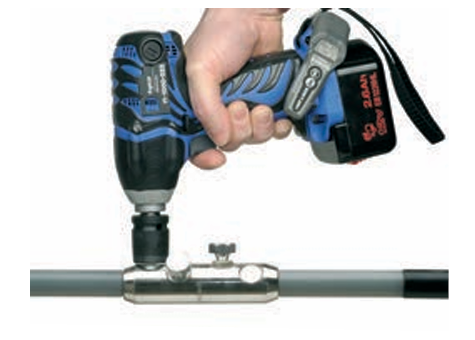
TE’s cordless impact wrench can also
be used to install the connector. These
two convenient and quick tools have
been tested and qualified to install
Shear Bolt connectors
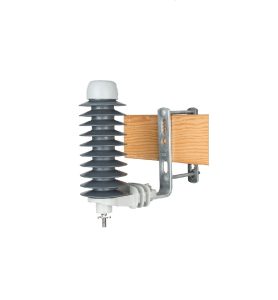
IEC Class Station Medium Polymer Housed Surge Arrester
High quality solid-core station class arresters qualified to both IEEE and IEC arrester standards